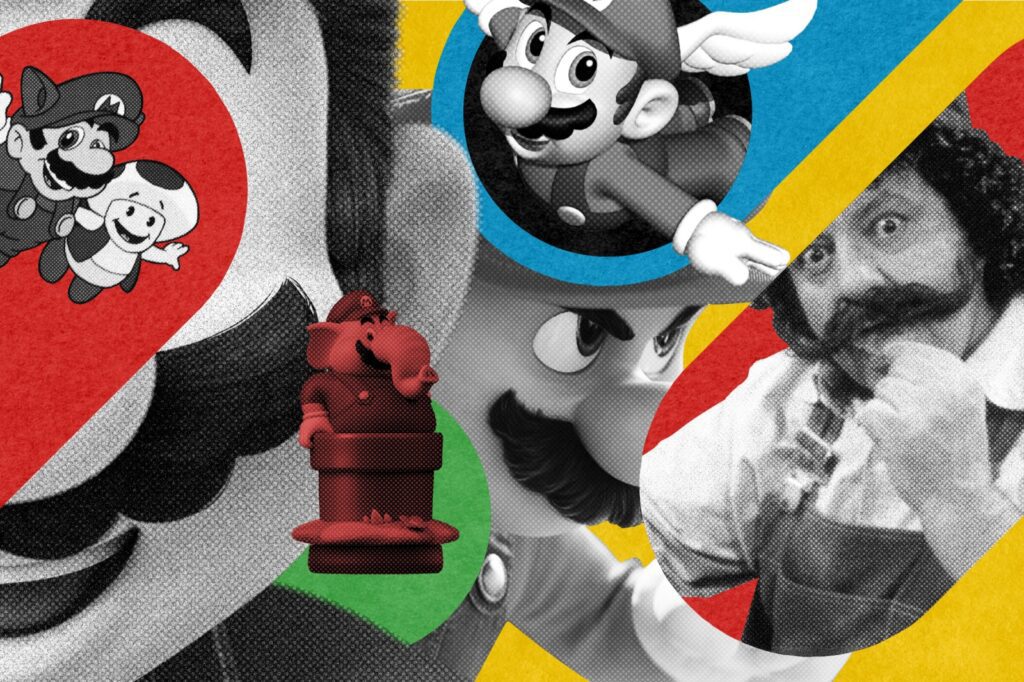
The Evolution of Mario: How a Nameless Arcade Avatar Became a Global Icon
The Accidental Genesis of a Gaming Legend
In 1981, legendary game designer Shigeru Miyamoto faced a significant creative hurdle. While developing one of his earliest titles, he envisioned using the iconic Popeye the Sailor as the protagonist. Despite Nintendo holding the rights to Popeye-themed merchandise, a full-fledged video game adaptation remained elusive. Miyamoto pivoted, creating original characters to fill the void. The sailor became a nameless plumber, eventually dubbed ‘Jumpman,’ while his antagonist, Bluto, was reimagined as the titular ape in Donkey Kong.
Following this impromptu debut, the character underwent rapid refinement. By 1982, he had acquired his now-famous name and a defined set of traits. Miyamoto describes the character as a 26-year-old with a mustache—perhaps not the most intellectual, but possessing immense heart, emotion, and courage. This foundation allowed Mario to transcend his humble arcade beginnings.
The Golden Age and the Savior of Gaming
The mid-1980s marked a pivotal era for the character. With the release of Super Mario Bros. in 1985 for the Nintendo Entertainment System, the industry witnessed a tectonic shift. Following the 1983 video game crash, which was largely driven by an oversaturation of low-quality software, Mario helped revitalize the medium. His games became a masterclass in design, pushing the boundaries of what interactive entertainment could achieve.
Super Mario Bros. established the core mechanics that would define the franchise for decades: agility, precise jumping, and the strategic use of power-ups like mushrooms and fire flowers. Mario’s mission—rescuing Princess Peach from the clutches of Bowser—became the quintessential gaming narrative, providing a simple yet compelling framework for countless sequels.
A Cross-Media Evolution
As Mario’s popularity soared, he began to appear in various media formats, including television series like The Super Mario Bros. Super Show!. These adaptations introduced elements that would eventually bleed back into the games, such as the brothers’ Brooklyn origins and their hyperbolic Italian accents. While the 1993 live-action film was a critical and commercial failure that discouraged Nintendo from pursuing film adaptations for nearly three decades, it highlighted the character’s adaptability.
The character’s transition into 3D with Super Mario 64 in 1996 was another revolutionary moment. For the first time, players experienced a Mario that felt truly alive, with a voice provided by Charles Martinet that added depth and personality to the digital avatar. Simultaneously, Super Mario RPG challenged the perception of the character, proving that Mario could thrive in narrative-heavy, turn-based environments without losing his core identity.
The Modern Era and Enduring Legacy
In 2023, Nintendo and Illumination successfully rehabilitated Mario’s cinematic image with The Super Mario Bros. Movie. By adhering closely to the lore and aesthetic of the games, the film resonated with audiences, grossing over $1 billion. This success paved the way for a broader Nintendo cinematic universe, with sequels like The Super Mario Galaxy Movie continuing to expand the franchise’s reach.
Ultimately, Mario’s staying power lies in his paradox: he is a consistent, recognizable icon who can simultaneously inhabit any role, from doctor to racecar driver. As Miyamoto suggests, Mario is less a static character and more a member of a troupe of actors, capable of taking on different roles while maintaining his fundamental core of joy and goodness. This essential quality ensures that Mario remains a cultural force, transcending generations of players and evolving alongside the medium he helped save.