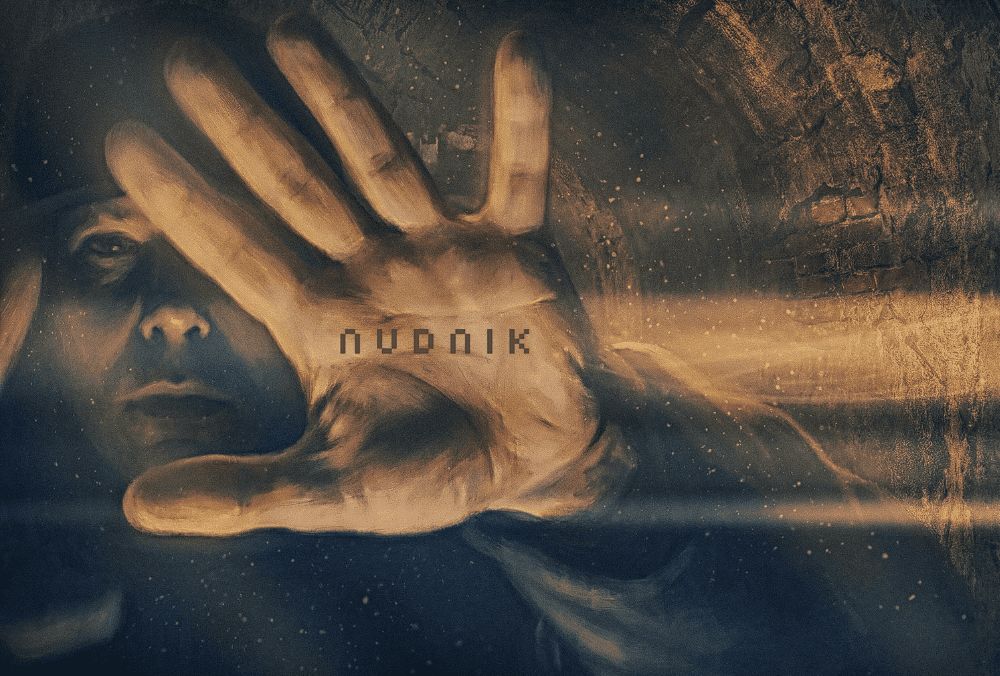
NUDNIK Releases Under The Underground: A Cinematic Descent Through Grief, Time, and Fragile Clarity
Out today, December 30, Under The Underground arrives as NUDNIK’s most immersive and emotionally resolved statement to date. Rather than positioning itself as a traditional release, the album unfolds like a passage — one shaped by loss, reflection, and the slow reassembly of meaning. It is a record that doesn’t rush catharsis, choosing instead to sit inside uncertainty, allowing its emotional weight to breathe.
Written during a period marked by profound personal loss, Under The Underground follows NUDNIK’s debut iNODE but sharpens its focus. Where the earlier album collected years of creative exploration, this release is anchored in immediacy. Every track feels tethered to a specific emotional state, moving deliberately through grief not as a concept, but as a lived, nonlinear process.
The album opens with “Zen Silence,” a mantra-like invocation that establishes the record’s spiritual and emotional framework. Built around stillness, breath, and endurance, the track functions as a grounding ritual — a pause before the descent. From there, “Under The Underground” drifts into the dreamlike disorientation of “Pillow,” a song that blurs comfort and collapse, expanding personal exhaustion into something cosmic and shared.
As the album unfolds, NUDNIK repeatedly returns to the theme of time, not as a metaphor, but as a pressure. “Every Second Counts” spirals with anxious urgency, portraying time as both teacher and tormentor, while “Blue Day” zooms outward, framing individual lives as tiny orbits within a vast, indifferent universe. These songs don’t offer answers; they document awareness, the kind that arrives when loss sharpens perception.
Love, too, appears throughout the album, as continuity. “Love Is Eternal” reads like a message sent across worlds, suggesting that devotion doesn’t end with physical absence. Elsewhere, “Innocent Sorrow” balances tenderness and resolve, urging a wounded soul to stand back up in a world that too often rewards cruelty over gentleness.
Mid-album tracks such as “The Modern Shock” and “Dissemination” widen the scope even further, confronting digital overload, fractured attention, and the relentless noise of modern life. These moments feel intentionally claustrophobic, mirroring the sensory saturation they critique, before dissolving into quieter clarity.
By the time the album reaches its final stretch, something shifts. “A Fool” captures the numb clarity that follows disillusionment, while “Zen As The Middle Ground” searches for balance between emotional extremes. The closer, “Transcendental,” feels like a meditation on impermanence, solitude, and the quiet grace found in acceptance. Its final spoken mantras of compassion, forgiveness, and gratitude don’t resolve the journey; they honor it.
Sonically, Under The Underground remains restrained and intentional. Shadowed guitars, subtle synths, and patient arrangements give the lyrics room to land without distraction. The production favors atmosphere over spectacle, reinforcing the album’s inward gaze and cinematic pacing.As a premiere, Under The Underground stands apart not through volume or urgency, but through presence. It is an album meant for full immersion — a work that rewards listening in sequence, in stillness, and without interruption. In a landscape driven by immediacy, NUDNIK offers something rarer: a record built for reflection, and for the quiet moments where meaning slowly reveals itself.