The High Stakes of the Supreme Court’s Birthright Citizenship Challenge
The Legal Battle Over Birthright Citizenship
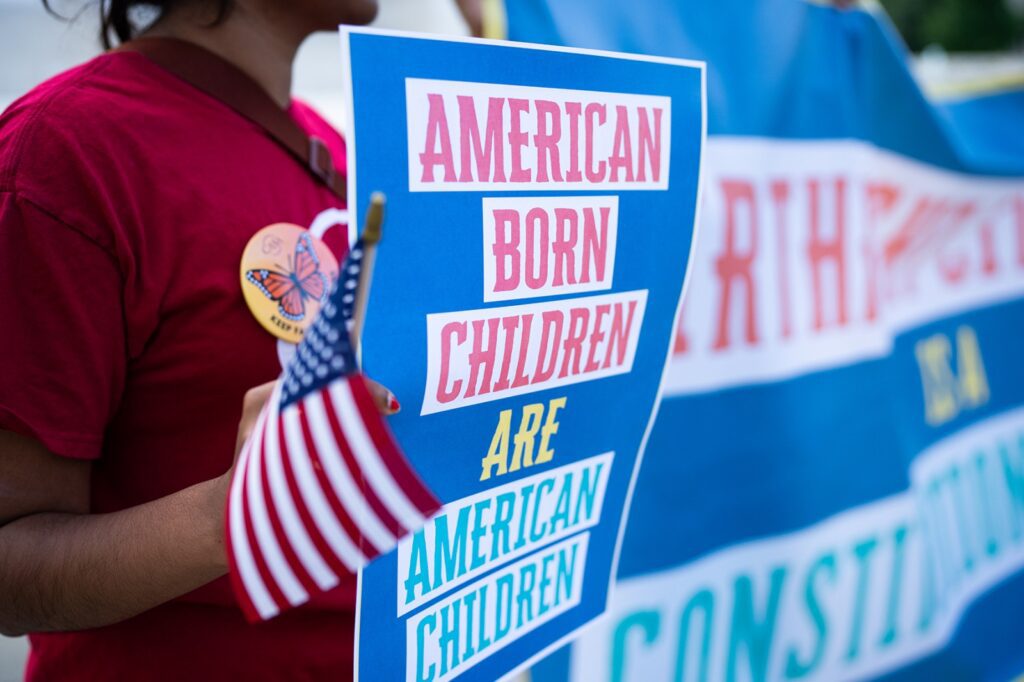
The Supreme Court is set to hear oral arguments in Trump v. Barbara, a pivotal case that challenges the long-standing interpretation of the Fourteenth Amendment. At the heart of the dispute is an executive order issued by President Donald Trump during the first days of his second term, which seeks to deny citizenship to children born in the United States to parents who lack permanent immigration status. This move represents a direct assault on the principle of birthright citizenship, a cornerstone of American law established by the 1898 Supreme Court decision in United States v. Wong Kim Ark.
While the administration frames this as an immigration enforcement measure, legal scholars and civil rights advocates argue that the implications extend far beyond the border. The case forces the judiciary to decide whether a president can unilaterally override a constitutional interpretation that has been accepted for over a century, effectively bypassing the legislative process to reshape the definition of American citizenship.
The Practical Burden on American Families
Beyond the constitutional questions, the enforcement of this executive order would create a massive bureaucratic hurdle for all Americans. Currently, the process of obtaining a birth certificate and a Social Security card is a streamlined, automated procedure known as ‘Enumeration at Birth.’ However, because birth certificates do not typically record the citizenship status of a child’s parents, the Trump administration’s policy would render these documents insufficient for proving a child’s citizenship.
If this order is upheld, parents would be forced to provide additional, often difficult-to-obtain evidence to prove their own citizenship status to federal agencies. Since the United States does not maintain a centralized national registry of citizens, this would likely lead to significant delays, administrative errors, and the exclusion of many legitimate citizens who lack passports or other specific federal documentation. The burden would fall disproportionately on families who cannot afford the time or expense required to navigate these new, more complex requirements.
Citizenship as a Precarious Status
The broader concern is that this policy is not merely about immigration, but about making the protections of citizenship more precarious for everyone. By creating a system where citizenship must be actively proven through bureaucratic hoops rather than being recognized as a birthright, the administration is effectively undermining the security of belonging for all Americans. This shift could lead to a scenario where children who fail to navigate these new procedures are left without a Social Security number, hindering their ability to work, pay taxes, or access essential government benefits.
Ultimately, the Supreme Court’s decision in Trump v. Barbara will determine whether the United States maintains its commitment to the principle of birthright citizenship or moves toward a system where citizenship is a conditional status subject to administrative verification. The outcome will define the relationship between the state and the individual for generations to come, potentially transforming the very nature of what it means to be an American.