13 Essential Hip-Hop Songs for 808 Day
The pillars of hip-hop are often described as DJing, MCing, breakdancing, and graffiti, which was true when the genre burst onto the scene in 1973. However, one could argue that the modern adaptation of those four tentpoles may be a little different today.
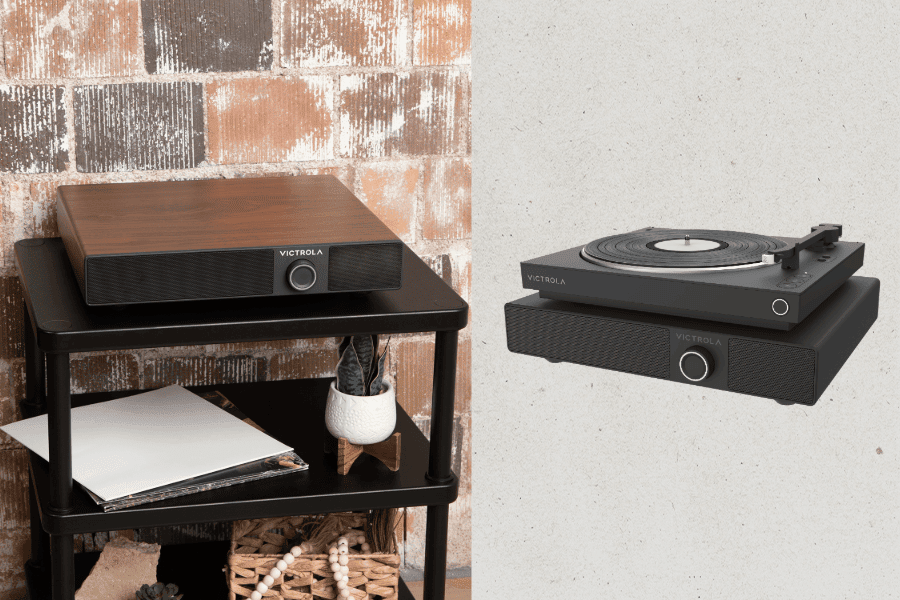
One thing to consider is the 808, short for the Roland TR-808 drum machine. Though the product launched in 1980 and only stayed on shelves until 1982, it has changed multiple lanes of music forever. Its two-year existence was enough to inspire bright minds to create legendary records like Marvin Gaye’s “Sexual Healing,” Whitney Houston’s “I Wanna Dance With Somebody,” and Egyptian Lover’s “Egypt Egypt,” among others.
When it comes to hip-hop, an 808 may be one of the most important and enduring foundational elements of beatmaking. The best part is that it has woven its way through so many eras. Below, we list 13 songs that display why 808 Day is as essential to hip-hop as it is in other genres.
The Legacy of the 808 in Hip-Hop
Make no mistake about it, a lot of today’s music is inspired by Black music. That’s why Afrika Bambaataa and The Soulsonic Force blending hip-hop and electro music elements in 1982 on “Planet Rock” was nothing out of the ordinary. Beyond that, this song popularized what the Roland TR-808 drum machine was capable of: “Putting the boom in music.”
Sir-Mix-A-Lot was more than an artist who could cleverly yet directly describe a woman’s backside. Before that, the Emerald City producer shouted out the 808 by name on his breakthrough single “Posse On Broadway.” The 1988 track marked the first time a rapper from anywhere other than the East Coast, West Coast, or South truly gained national recognition.
Run-D.M.C. made magic alongside Rick Rubin as well. Their 1987 record “It’s Tricky” appeared on their LP from that same year, Raising Hell. On top of the iconic cymbal crash from the 808s, there was an interpolation of The Knack’s “My Sharona” and scratches from Jam Master Jay.
Outkast was truly enigmatic. The Dungeon Family dwellers influenced so many of Atlanta’s top acts, and yet they simultaneously created sounds that made people question their city of origin. 2003’s “The Way You Move” featuring Sleepy Brown, in particular, shook up the earth with its cutting, nimble 808 percussion, electronic elements, and low-end bounce.
Missy Elliott’s 2005 hit “Lose Control” is a special case. Though it does not officially use the Roland TR-808 drum machine, its sounds are inspired by the device. Instead, it samples Cybotron’s “Clear” and Hot Streak’s “Body Work,” the former of whom was driven by the influence of TR-808s on early techno and electro.
One song wasn’t enough for Ye, formerly known as Kanye West, to show his affinity for 808s. He quite literally made a whole album powered by the machine and even added it to the title, with 2008’s 808s & Heartbreak. The Chicago artist showed fans just how different he was, coming with the lead single “Love Lockdown.”
Ye didn’t just save all the 808 magic for himself, though. In 2008, he also produced “Let The Beat Build” for Lil Wayne, a cut from his highly anticipated, record-breaking LP, Tha Carter III. The record is highlighted by a simple, consistent 808 snare that backs Weezy F Baby’s shapeshifting verses during an era when he was hot as fish grease.
In 2013, Drake followed up “YOLO” with another mantra for the people: “Started from the bottom, now we’re here.” While the Nothing Was The Same lead single became an anthem for its lyrics, it hit even harder because of the production. Mike Zombie and Noah “40” Shebib crystallized the dark, moody, minimalist production common to Drizzy’s music and put extra sauce on it with a thumping 808 sub-bass.
Please rise for the national anthem. In the middle of the hottest run of his career, Future unleashed “March Madness,” the lead single from his 2015 mixtape 56 Nights. Fittingly, it was produced by 808 Mafia’s Tarentino, who utilized a distorted, sliding 808 bassline with a huge low-end bounce and rapid hi-hat groove trio.
With Public Enemy known for aggressive records like “Fight The Power,” it is no surprise that they helped initiate what would later become hardcore rap by using 808s. 1987’s “Yo! Bum Rush The Show” was the title track of their debut album, which is regarded as one of the most influential LPs in hip-hop history.
The Beastie Boys decided to put their thing down, flip it, and reverse it in 1986–the 808s on a specific song, that is. Their classic record “Paul Revere” is best known for quite literally playing a stripped-down 808 beat completely in reverse.
It is crazy enough that LL Cool J’s 1985 track “Rock The Bells” features himself, Rick Rubin, DJ Cut Creator, and a sample of the guitar riff and hook from AC/DC’s “Flick The Switch.” You may make a music nerd spontaneously combust when you add in the fact that its punchiness and core rhythm come from 808s, and helped define early minimalist boom-bap production.
T La Rock & Jazzy Jay took the ball and ran with it on 1984’s “It’s Yours.” The heavy, 808-driven percussion record was the first ever single released by Def Jam, courtesy of Rick Rubin. T La Rock started the trend and a new direction in hip-hop, creating a special poetry that would influence generations of artists to come.