Sandy Ortega Proves It’s Never Too Late to Begin Again
There’s a quiet kind of inspiration in Sandy Ortega ‘s story, one that doesn’t rely on hype or reinvention myths. It’s rooted in a simple idea: you are always allowed to start something new. Even if the path looks unconventional. Even if the timing feels late by industry standards.
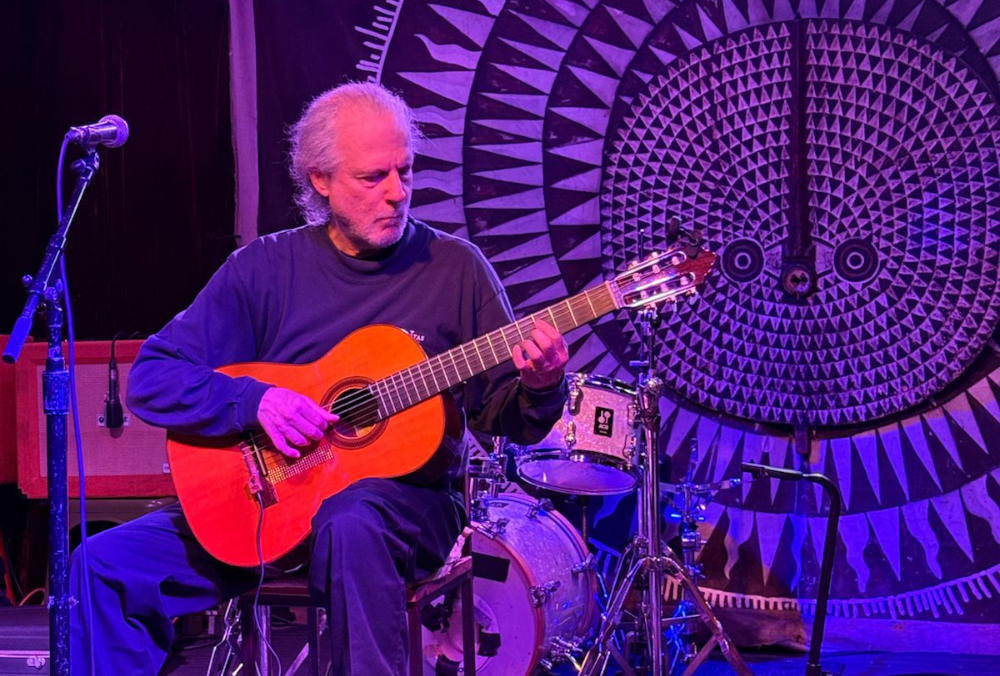
Sandy Ortega began playing guitar in his mid-50s. Today, at 66, he stands as a working musician with a clear artistic direction, a growing body of original compositions, and ambitions that continue to expand rather than shrink. His journey challenges the unspoken rule that music careers must begin early to matter.
Ortega didn’t approach the guitar casually. From the start, he treated it as a discipline. He focused his studies on Spanish-Andalusian and flamenco traditions, committing to technique, structure, and tone rather than experimentation for its own sake. Over the past decade, that commitment has resulted in 41 original compositions, each one part of an ongoing process rather than a final destination.
In interviews, Ortega often speaks about music in practical terms. Progress comes from repetition. Respect for the instrument matters. Improvement is something earned over time, not rushed. That mindset shapes how he performs. His live sets are focused and intentional, whether he’s playing in cultural spaces like the New York Public Library or intimate venues such as Harlem’s Silvana. The performance isn’t built around spectacle. It’s built around presence.
What makes Ortega’s story especially resonant is how openly he acknowledges both ambition and reality. He has spoken about aiming for venues like Carnegie Hall, Sony Hall, and Le Poisson Rouge — not as fantasies, but as legitimate next steps. In the classical guitar world, these spaces still signal artistic legitimacy. At the same time, he understands the tension he carries with him. His work is polished, but his presentation remains raw. That balance between refinement and simplicity defines where he is now.
There’s no attempt to frame his journey as extraordinary luck. Instead, it’s presented as proof of choice. Ortega chose to begin. He chose to stay consistent. He chose not to let age dictate relevance or possibility.
In a culture that often equates youth with opportunity, Sandy Ortega offers a different perspective. Growth doesn’t expire. Craft doesn’t have a deadline. Starting late doesn’t mean starting behind.
His story isn’t about catching up. It’s about moving forward with intention. And for anyone standing at the edge of something new, wondering if it’s too late to begin, Ortega’s path offers a clear answer: it isn’t.