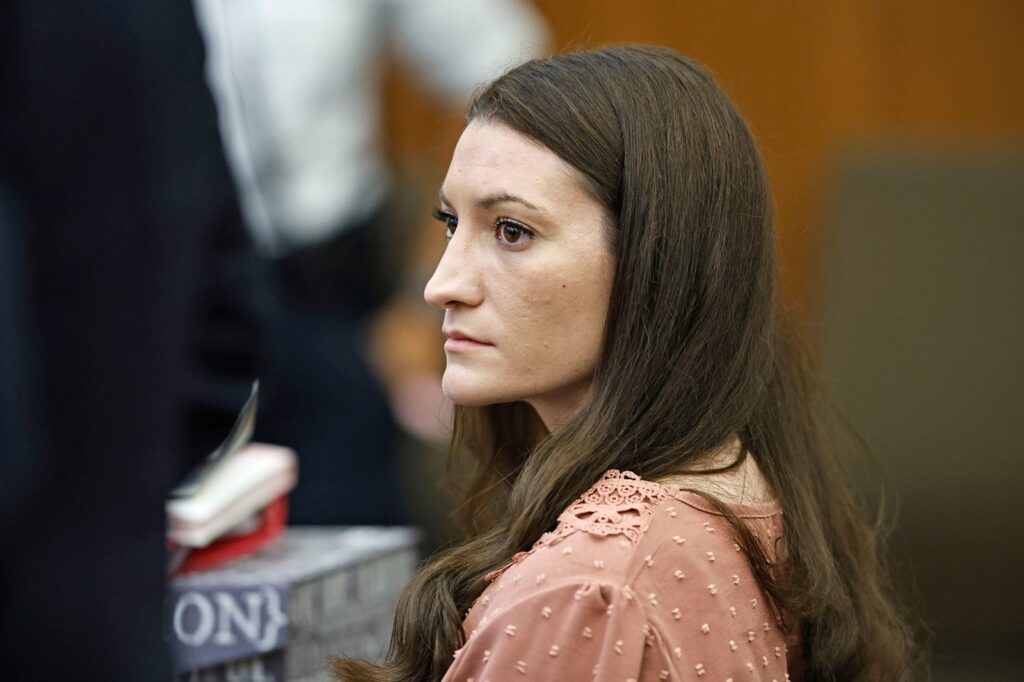
Closing Arguments Conclude in Lindsay Clancy Murder Trial
Closing arguments in the case against Lindsay Clancy, the Massachusetts mother accused of strangling her three children to death in 2023, were delivered on Thursday, marking the 22nd day of a trial that has captivated the nation. Clancy faces three counts of first-degree murder in connection with the deaths of her children—Cora, five; Dawson, three; and eight-month-old Callan—in January 2023. While she has not denied the act, the trial centers on her mental state and legal responsibility at the time of the incident.
The Defense’s Argument: Postpartum Psychosis
Clancy’s defense attorney, Kevin Reddington, centered his closing argument on the assertion that his client was suffering from severe postpartum psychosis, a rare but debilitating condition. Reddington criticized the prosecution’s case as a “repulsive” attempt at manipulation, arguing that Clancy was a devoted mother whose mental health deteriorated rapidly due to a combination of heavy medication and inadequate psychiatric care. He walked jurors through a complex timeline of her medical history, highlighting the numerous prescriptions she received and her desperate, unsuccessful attempts to seek help.
“She was reaching out for help, and she was not getting it,” Reddington told the jury. He emphasized that Clancy’s actions were the result of a medical system that failed to recognize the severity of her condition, contrasting her experience with broader international standards for postpartum psychiatric care.
The Prosecution’s Rebuttal: Rationality and Intent
In response, prosecutor Jennifer Sprague argued that the trial is not a critique of the mental health system, but a determination of whether Clancy understood the nature of her actions. Sprague contended that Clancy acted with intent and rationality, noting that she had access to significant medical resources. The prosecution argued that Clancy’s decision to withhold her thoughts of harming her children from her doctors—while sharing them with her husband—demonstrated an awareness that her impulses were wrong.
“She left them discarded on the basement floor like broken toys because she was done playing the game,” Sprague stated during her closing. The prosecution maintained that Clancy’s actions were a deliberate choice, rather than the result of a psychotic break, and urged the jury to find her guilty.
Expert Testimony and Trial Context
The trial featured extensive testimony from forensic experts, including Dr. Phillip Resnick for the defense, who testified that Clancy was “clearly psychotic” and experiencing an altruistic filicide. Conversely, the prosecution presented rebuttal witnesses, including forensic psychologists Dr. Kirk Heilbrun and Dr. Gregory Saathoff, who challenged the diagnosis of postpartum psychosis and argued that Clancy retained an awareness of the illegality of her actions.
As the jury begins deliberations, the case remains a somber reflection on the intersection of maternal mental health, the complexities of the legal system, and the tragic loss of three young lives. The trial has drawn significant public attention, with supporters of Clancy gathering outside the Plymouth Superior Court throughout the proceedings.