The Devastating Reality of Nepal’s Climate-Driven Floods
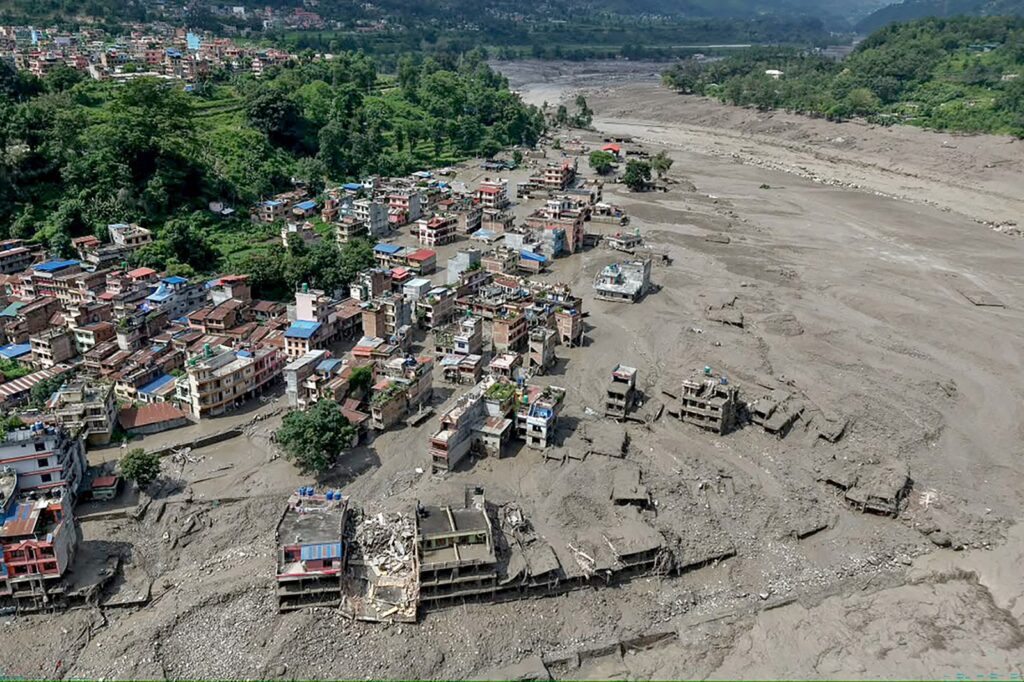
A flash flood that struck Nepal last week has left over 1,000 people dead, and thousands more are missing. A landslide that was first thought to be the result of an earthquake actually appears to have resulted from a confluence of events surrounding part of a glacier breaking free at a high altitude, along with the loose earth surrounding it. Researchers around the world are using satellite imagery to try to understand what happened.
Video of the flood quickly spread online, though some had been fabricated by AI. Legitimate footage showed torrents of water sweeping through a valley. After the satellite data was initially analyzed, it was determined that part of a glacier in the mountains had snapped off, and the ice had melted as it cascaded downward and caused this flood. Essentially, there was an ice avalanche. A powerful mixture of rock, earth, and water plunged through the valleys of the Himalayas and made its way to populated areas.
The Science Behind the Himalayan Disaster
The story is a little more complicated than that, according to experts who study these kinds of glaciers. Daniel Shugar, a geologist at the University of Calgary in Canada, explains that much more than that piece of glacier broke off the mountain. “A giant chunk of the mountainside — we don’t know the exact volume yet — broke loose and took a piece of the glacier with it,” Shugar says.
It may be that warm temperatures thawed permafrost on the mountain, allowing meltwater to seep into rock fractures and loosen the mountainside, which caused this disaster. This permafrost essentially holds together the mountainside near these glaciers. If that becomes structurally unsound, it can take part of the glacier with it, as the satellite images appear to show.
“A couple dozen other scientists are working on this research together, around the world,” Shugar says, noting that there is a global community of scientists volunteering their time, expertise, and skills to cooperate on figuring this out.
Climate Change and Future Risks
Marin Clark, a geophysicist at the University of Michigan, notes that the material that made up the landslide was traveling incredibly fast down the mountain. The friction from the speed could quickly melt the ice within it, which could have contributed to the immense floodwaters. “It reached the first affected town in only seven minutes,” Clark says. “We have a lot of trouble attributing any one specific event to climate change. But what we do know is that the warming conditions we’ve seen in the Himalayas over the last several years are exactly the kind that can lead to processes like what we observed last week.”
Clark emphasizes that large, sediment-laden floods in this region have been increasing in number over the last decade, and warming temperatures appear to be a significant factor. Nepal is currently seeking $5 billion in aid from the United Nations climate fund to address the destruction.
Shugar notes that changes in the weather could have contributed to the conditions that caused this flood, not just the melting of permafrost. “If you change the seasonality of precipitation — more rain instead of snow, or more winter rain than there used to be — that can lead to slope stability issues, too,” Shugar says. The more liquid water is present on the ground, the more unstable it becomes.
This event is analogous to the 2021 Chamoli disaster in India. “This is a similar kind of thing, where you have this flood downstream and nobody initially knew what it was or what caused it,” Shugar says. “People thought it must be a glacial lake outburst flood, but it was a landslide with a piece of glacier on top that collapsed and melted all of the ice.”
While the exact role of climate change remains a subject of ongoing study, experts agree that early warning systems are now a critical priority for the region. Developing systems that recognize seismic signals could provide communities downstream with the necessary time to evacuate to higher ground.